
Why A2 Desi Ghee Is Making a Comeback in ModernIndian Kitchens?
For years, people avoided ghee thinking it was “too fatty” for a healthy lifestyle. But today, nutrition science and traditional wisdom are coming together again. Many health experts now agree that when consumed in the right quantity, pure desi ghee can actually support digestion, metabolism, and even heart wellness.
At Kisanians, we believe that the food choices we make every day should be both traditional
and scientifically sensible. Let’s understand why A2 desi ghee deserves a place in your kitchen.
The Traditional Strength of Indian Ghee
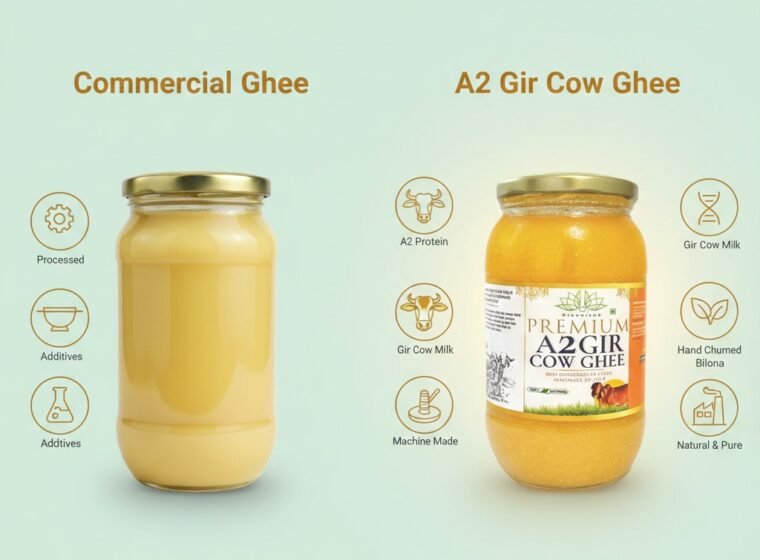
In Indian households, ghee has never been just cooking fat — it is part of rituals, Ayurveda, and daily nourishment. Traditionally prepared ghee (especially from curd using the bilona method) retains natural nutrients that are often lost in highly refined oils.
Unlike chemically processed oils, authentic A2 ghee is:
- Minimally processed
- Free from artificial additives
- Naturally rich in beneficial fats
- Stable for Indian cooking methods
This makes it not just flavorful, but functionally nutritious.
Key Health Benefits of A2 Desi Ghee
1. Supports Digestive Strength
Desi ghee contains natural short-chain fatty acids that help nourish the gut lining. In Ayurveda, it is considered beneficial for improving digestion and reducing internal dryness. Adding a small spoon to dal or rice can enhance nutrient absorption.
2. Provides Natural Energy
Healthy fats are a steady source of energy. Unlike refined carbs that spike blood sugar, ghee provides sustained fuel, keeping you satisfied for longer and helping reduce unnecessary snacking.
3. Helps Maintain Heart Balance (In Moderation)
When consumed mindfully, A2 ghee can be part of a balanced diet. It contains beneficial fats that may support overall cholesterol balance when combined with an active lifestyle and wholesome food habits.
The key is moderation — not elimination.
4. Rich in Fat-Soluble Nutrients
Ghee naturally contains vitamins like A, D, E, and K. These nutrients play an important role in:
- Bone strength
- Immunity
- Skin health
- Hormonal balance
Since they are fat-soluble, consuming them with ghee improves absorption.
5. Ideal for Indian Cooking
One major advantage of desi ghee is its high smoke point. It remains stable at high temperatures, making it perfect for:
- Tadka
- Sautéing
- Roasting
- Traditional sweets
Many refined oils break down under heat, but ghee maintains stability, making it safer for
everyday Indian cooking.
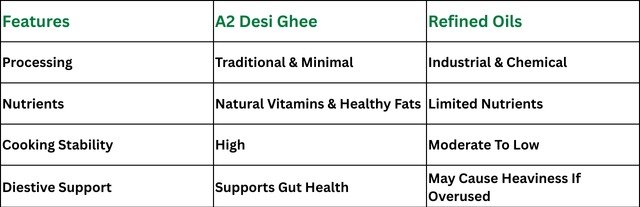
Ghee vs Refined Oils – What Makes the Difference?
Smart Ways to Include Ghee Daily
- Add 1 tsp to warm dal or khichdi
- Use for chapati or paratha instead of refined oil
- Prepare tadka using ghee
- Mix a small amount in millet-based meals
- Use externally for dry skin care
Recommended Intake: 1–2 teaspoons per meal (depending on individual health condition).
Choosing the Right Ghee Matters
Not all ghee is the same. The benefits depend on:
✔ Quality of milk (A2 native cow milk preferred)
✔ Traditional preparation method
✔ No chemical processing
✔ No artificial flavors or preservatives
At Kisanians, we focus on purity, ethical sourcing, and traditional preparation methods to
ensure every spoon carries the goodness of authentic Indian farms.
The Bottom Line
Desi ghee is not the enemy — overconsumption and poor lifestyle choices are. When sourced correctly and consumed in moderation, A2 ghee can support digestion, energy, and overall wellness.
Returning to traditional fats like pure desi ghee is not about going backward — it’s about choosing smarter, cleaner nutrition for modern living.

